Asus ZenFone 7 Pro Price in Pakistan, Specs & Features

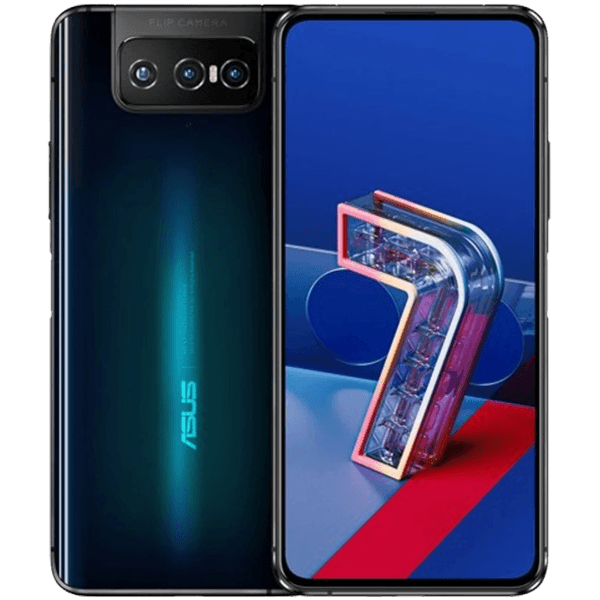
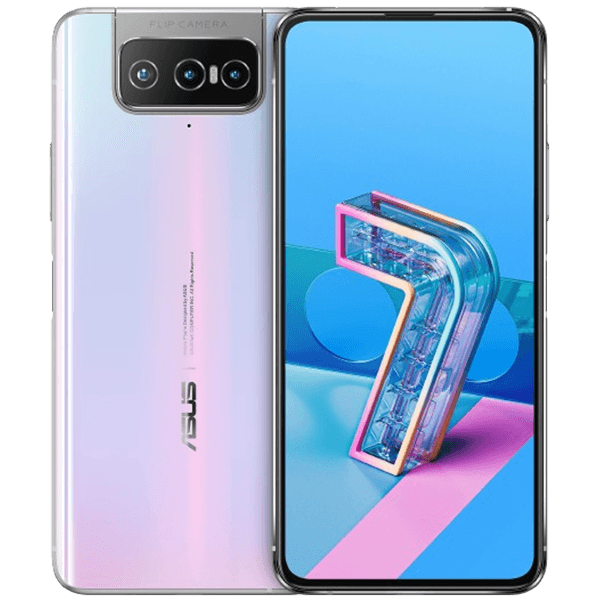
-
OS: Android 10
-
Processor: Qualcomm® Snapdragon™ 865 Plus 5G
-
Storage: 256GB
-
Ram: 8GB
-
Camera: 64 MP + 12 MP + 8 MP
Specifications
General
| Device Type | Smartphone |
| Model | Asus ZenFone 7 Pro |
| OS | Android 10, upgradable to Android 12 |
| UI | ZenUI 7 |
| Announced | 26 August, 2020 |
| Released | 07 September, 2020 |
| Status | Available |
| Price in Rs | 115,000 (Estimated) |
| Price in USD | $414.99 (Estimated) |
Design
| Type Design Type called form factor refers to a mobile phone's size, shape, and style as well as the layout and position of major components of phone. There are three major form factors seen in mobile phones => bar phones, folding phones and sliding phones. | Smartphone |
| Dimensions | 165.08 x 77.28 x 9.6 mm |
| Weight | 230g |
| Colors | Pastel White, Aurora Black |
Network
| 2G Network |
SIM1: GSM 850 / 900 / 1800 / 1900 SIM2: GSM 850 / 900 / 1800 / 1900 |
| 3G Network | HSDPA 800 / 850 / 900 / 1700(AWS) / 1900 / 2100 |
| 4G Network | 1, 2, 3, 4, 5, 7, 8, 12, 17, 18, 19, 20, 26, 28, 29, 38, 39, 40, 41 |
| 5G Network | 1, 2, 3, 5, 7, 8, 12, 20, 28, 38, 77, 78 SA/NSA |
| SIM SIM (Subscriber Identity Module) is a small card that contains mobile network subscriber's account information. This allows the phone using the card to attach to a mobile network. The SIM card is most commonly associated with GSM and UMTS mobile networks. Moving a SIM card from one phone to another allows a subscriber to switch mobile phones without having to contact their mobile network carrier. SIM cards can also be used by a phone to store limited amounts of data, such as phone numbers and text messages. | Nano-SIM + Nano-SIM |
| Dual SIM | Yes |
Processor
| CPU CPU (Central Processing Unit) mostly known as processors, CPU processes instructions in order to carry out certain functions that make your device operate properly. Processors are often described as the brain of computers, smartphones and tablets, Smartphones and tablets rely on processors to carry out their every task, Processors are an incredibly important factor in selecting any type of computing device, including your smartphone. | Octa-core (1x3.10 GHz Cortex-A77 & 3x2.42 GHz Cortex-A77 & 4x1.80 GHz Cortex-A55) |
| Chipset Chipset is a group of integrated circuits designed to perform one or a more dedicated functions, often with real time computing constraints, Popular smartphones are equipped with more advanced embedded chipsets that can do many different tasks depending on their programming. | Qualcomm SM8250 Snapdragon 865 5G+ (7 nm+) |
| GPU GPU (Graphics Processing Unit) is a single-chip processor designed to rapidly manipulate and alter memory to accelerate the creation of images in a frame buffer intended for output to a display, This includes things such as lighting effects, object transformations, and 3D motion. | Adreno 650 |
Display
| Display Type Display Technology => A number of display technologies and types used in mobile phones => TFT (Thin Film Transistor), IPS (In-Place Switching), OLED (Organic Light Emitting Diode), AMOLED (Active-Matrix Organic Light-Emitting Diode), Super AMOLED (an even advanced version of AMOLED), Resistive Touchscreen (Resistive touchscreens contain two layer of conductive material with a very small gap between them which acts as a resistance), Capacitive Touchsceen (Capacitive touchscreen technology consists of a layer of glass coated with a transparent conductor) | Super AMOLED |
| Size | 6.67 inches |
| Resolution | 1080 x 2400 pixels |
| Display Colors Display Colors is refers to the number of different shades of colors that the screen is capable of displaying => 64K colors, 256K colors and 16 million colors, Obviously 16M is highest available range of colors and better than others. | N/A |
| Pixel Density Pixel Density (PPI) is refers to the concentration of pixels on a particular display, measured in pixels per inch (ppi). Pixel density is calculated by dividing the diagonal pixel resolution of a display by its diagonal size, higher pixel density better display quality. | ~395 ppi |
| Touch Screen | Yes |
| Display Protection Display Protection => Gorilla Glass is a special alkali-aluminosilicate glass shield with exceptional damage resistance that helps protect mobile displays from scratches, drops, and bumps of everyday use, It is always better to go for a smartphone with Gorilla Glass for that added protection and peace of mind. | Corning Gorilla Glass 6 |
| Features | 90Hz, HDR10+, 700 nits (HBM) |
Storage
| ROM | 256GB Built-in, UFS 3.1 |
| Ram | 8GB LPDDR5 |
| Card Slot Memory Card Slot is a special slot for inserting a memory card. Memory cards allow you to expand the phone's built-in memory, A memory card (sometimes called a flash memory card or a storage card) is a small storage medium used to store data such as text, pictures, audio, and video, for use on small, portable or remote computing devices such as mobile phones, mp3 players, digital cameras. | microSDXC (dedicated slot) |
Camera
| Primary Camera Camera is able to capture photographs and usually videos, The most important characteristics of a camera are the resolution (measured in megapixels), lens focus type (fixed or automatic), higher megapixel cameras are known to capture higher quality photos, but not always a good measurement of the photos quality. | 64 MP, f/1.8, 26mm (wide), 1/1.72", 0.8µm, PDAF, OIS, 12 MP, f/2.2, 113˚, 17mm (ultrawide), 1/2.55", 1.4µm, dual pixel PDAF, 8 MP, f/2.4, 80mm (telephoto), PDAF, OIS, 3x optical zoom |
| Camera Features | HDR, auto panorama (motorized rotation), 8K@30fps, 4K@30/60/120fps, 1080p@30/60/240fps, 720p@480fps; gyro-EIS, HDR |
| Flash Flash Light => There is commonly two types of flash lights are used in camera mobile phones, LED Flash (LED flash offers lower power consumption with drive circuitry that takes up very little room, LEDs can be strobed faster than any other light source), Xenon Flash (xenon flash produces an extremely intense full-spectrum white light for a very short duration) | LED |
| Front Camera | Motorized flip-up main camera module |
Connectivity
| Wi-fi Wi-Fi is a popular wireless networking technology using radio waves to provide high-speed network connections that allows devices to communicate without cords or cables, Wi-Fi is increasingly becoming the preferred mode of internet connectivity all over the world. | Wi-Fi 802.11 a/b/g/n/ac/6, dual-band, Wi-Fi Direct |
| Wi-fi Hotspot | |
| Bluetooth Bluetooth is a wireless communications technology for exchanging data between mobile phones, headsets, computers and other network devices over short distances without wires, Bluetooth technology was primarily designed to support simple wireless networking of personal consumer devices. | 5.0, A2DP, LE, aptX Adaptive |
| GPS GPS The Global Positioning System is a satellite-based radio navigation system, GPS permits users to determine their position, velocity and the time 24 hours a day, in all weather, anywhere in the world, In order to locate your position, your device or GPS receiver must have a clear view of the sky. | GPS (L1+L5), GLONASS (L1), BDS (B1+B2a), GALILEO (E1+E5a), QZSS (L1+L5), NavIC (L5) |
| USB | USB Type-C |
| NFC NFC (Near field communication) is a set of standards for smartphones and similar devices to establish peer-to-peer radio communications with each other by touching them together or bringing them into proximity, usually no more than a few inches. | |
| Data | GSM / HSPA / LTE / 5G |
Media
| Audio | Yes, with stereo speakers |
| Browser | HTML5 |
| Games | Built-in + Downloadable |
Messaging
| SMS SMS (Short Messaging Service) is a text messaging service component of phone, Web, or mobile communication systems. It uses standardized communications protocols to allow mobile phone devices to exchange short text messages over the networks. | Yes (threaded view) |
| MMS MMS (Multimedia Messaging Service) is a standard way to send messages that include multimedia content (audio clips, video clips and images) to and from mobile phones over wireless networks using the WAP protocol. | |
| Email Email (Electronic Mail) is a system for receiving, sending, and storing electronic messages, Similar to a letter, email is text messages that may contain files, images, or other attachments sent via the internet to a recipient by using applications and software prograps. An email address is required to receive email, and that address is unique to the user. | |
| Push Mail | |
| IM IM (Instant Messaging) is an exchange of text messages through a software application, it enable you to create a kind of private chat room with another individual in order to communicate in real time over the Internet. |
Features
| Sensors Sensors are electronic components that detects and responds to some type of input from the physical environment. The specific input could be light, heat, motion, moisture, pressure and location, The output is generally a signal that is converted to use in computing systems, a location sensor, such as a GPS receiver is able to detect current location of your electronic device. | Fingerprint (side-mounted), accelerometer, gyro, proximity, compass |
Battery
| Capacity Battery Capacity is a measure (typically in Amp-hr) of the charge stored by the battery, and is determined by the mass of active material contained in the battery. The battery capacity represents the maximum amount of energy that can be extracted from the battery under certain conditions. | 5000 mAh |
| Battery Type Battery Type => Cell phones run on various kinds of batteries depending on the manufacturer, phone size or shape and features. There are basically four types of cell phone batteries => Lithium Polymer, Lithium Ion, Nickel Metal Hydride and Nickel Cadmium. | Li-Poly (Lithium Polymer) |
| Charging | Fast charging 30W wired, PD3.0, 60% in 34 min, 100% in 93 min |
| Wireless Charging Wireless Charging (Inductive Charging) uses an electromagnetic field to transfer energy between two objects. This is usually done with a charging station. Energy is sent through an inductive coupling to an electrical device, which can then use that energy to charge batteries or run the device. | No |
| Placement | Non-removable |
| Standby Standby Time is the total amount of time that you can leave your is fully charged, turned on and ready to send and receive calls or data transmissions before completely discharging the battery. | N/A |
| Talk Time Talk Time is the longest time that a single battery charge will last when you are constantly talking on the phone under perfect conditions, Ambient temperature and highly dependent on the cellular network environment such as the distance to the closest cell network tower. | Up ot 30 hrs |
| Music Play | N/A |
Benchmark
The Asus ZenFone 7 Pro is a premium smartphone that stands out for its unusual flip camera module, powerful hardware, and nearly stock Android experience. This device, which was released in August 2020, improves on its predecessor in terms of camera performance, computing power, and overall user experience. It has a 6.67-inch AMOLED display with a refresh rate of 90Hz and HDR10+ compatibility, resulting in bright colours and fluid images. Unlike most flagship smartphones, the ZenFone 7 Pro’s revolutionary motorised flip camera technology eliminates the need for a notch or punchhole. The camera combination consists of a 64MP Sony IMX686 primary sensor, a 12MP ultra-wide lens, and an 8MP telephoto lens with 3x optical zoom, all of which can be used for back and front-facing photography, resulting in unsurpassed selfie quality.
The gadget is powered by a Snapdragon 865+ processor, 8GB of RAM, and 256GB of UFS 3.1 storage, ensuring top-tier gaming and multitasking performance. The 5000mAh battery supports 30W fast charging and provides an outstanding battery life. The phone runs ZenUI 7, a lightweight and practically stock version of Android that provides a clean user interface with minimal bloatware. Additional features include 5G connection, dual speakers, a fingerprint scanner on the side, and a smart key that can be customised. The ZenFone 7 Pro lacks wireless charging and an official IP rating, but its premium glass and metal design radiates quality. This gadget is ideal for individuals who value camera variety, performance, and battery life, making it a standout in the flagship smartphone market.
FAQ
General Information
Q1: What is the price of the Asus ZenFone 7 Pro in Pakistan?
Ans: The price of the Asus ZenFone 7 Pro in Pakistan is 115,000 PKR (estimated).
Q2: What colors are available for the Asus ZenFone 7 Pro?
Ans: The Asus ZenFone 7 Pro is available in 2 colors (pastel white, aurora black).
Performance & Software
Q1: What is the processor for the Asus ZenFone 7 Pro?
Ans: The Asus ZenFone 7 Pro is powered by a Qualcomm Snapdragon 865 5G+ (7 nm+).
Q2: What operating system runs on the Asus ZenFone 7 Pro?
Ans: It works on Android 10.
Reviews
Disclaimer Note
Mobile Guider updates prices daily based on information from local dealers, but accuracy cannot be guaranteed due to potential human errors. We recommend checking with your nearest retailer for the most reliable pricing.
More Products from Asus


Top Rated
-
 Oppo Find X10 Pro Max 5G Price in Pakistan, Specs & Features
₨ 424,999
Oppo Find X10 Pro Max 5G Price in Pakistan, Specs & Features
₨ 424,999
-
Xiaomi 18 Pro 5G Price in Pakistan, Specs & Features
₨ 374,999
-
Xiaomi 18 Pro Max 5G Price in Pakistan, Specs & Features
₨ 399,999
-
RedMagic 12 Pro+ 5G Price in Pakistan, Specs & Features
₨ 399,999
-
Apple iPhone 18 Pro Max 5G Price in Pakistan, Specs & Features
₨ 604,999
-
Vivo X300 Ultra Price in Pakistan, Specs & Features
₨ 299,999




Latest Mobiles
-
Tecno Spark 50s 5G Price in Pakistan, Specs & Features
₨ 84,999
-
Tecno Spark 50C Price in Pakistan, Specs & Features
₨ 34,999
-
RedMagic 12 Pro+ 5G Price in Pakistan, Specs & Features
₨ 399,999
-
Lenovo Yoga Tab Plus 2 Price in Pakistan, Specs & Features
₨ 279,999
-
Samsung Galaxy Z Fold9 5G Price in Pakistan, Specs & Features
₨ 649,999
-
Vivo X500 E 5G Price in Pakistan, Specs & Features
₨ 299,999